
Plan the Layout
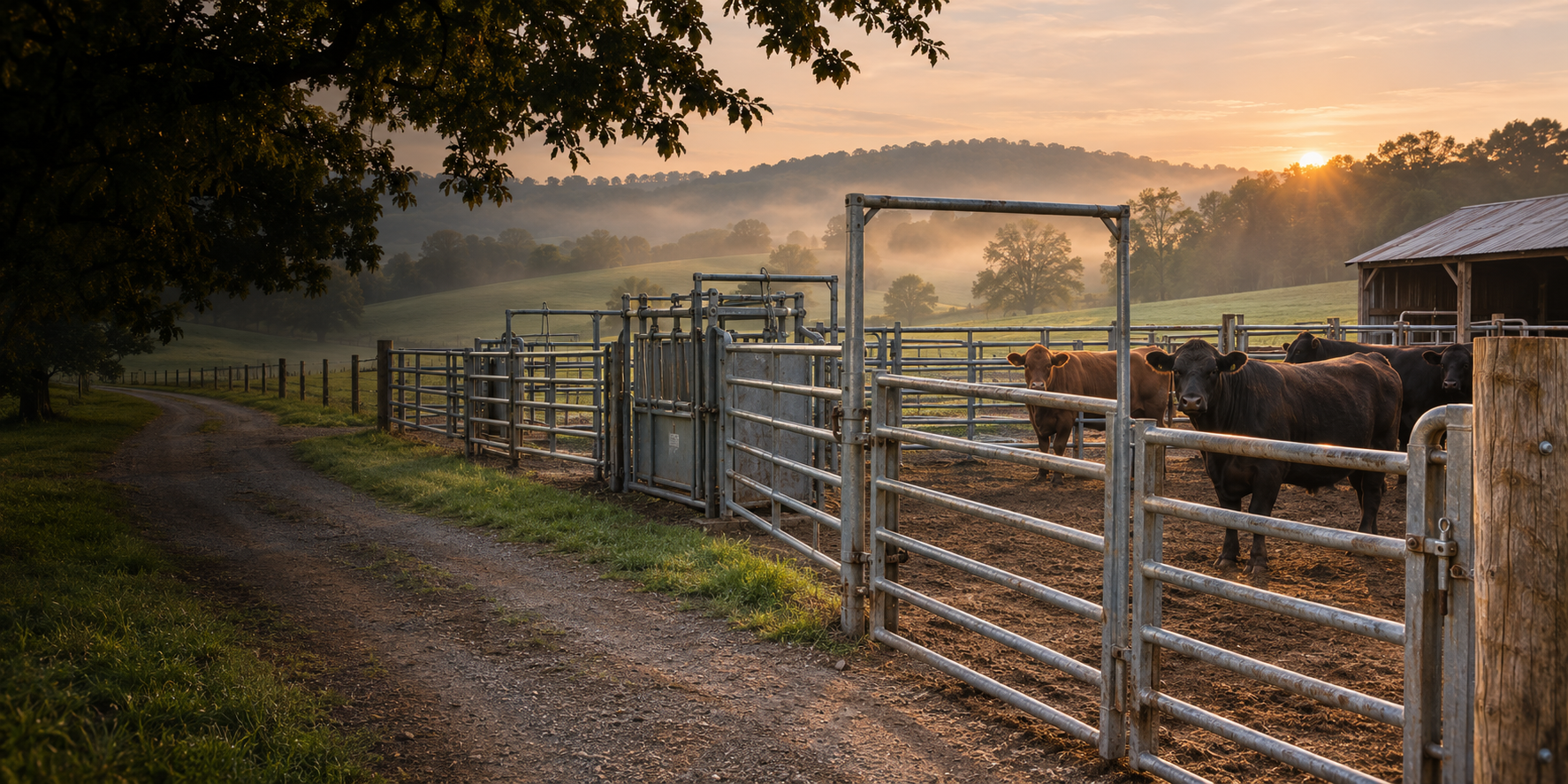
Begin with the jobs the pen must support: gathering, holding, sorting, treating, loading, and returning cattle to pasture. Sketch the site to scale and mark fences, slopes, drainage, utilities, buildings, roads, trailer approaches, and the direction cattle normally enter. A good layout uses familiar travel paths and gives handlers clear escape routes without forcing people to stand where cattle concentrate pressure.
Organize the system as a sequence rather than a collection of pens. Cattle should move from a larger holding area into smaller groups, then toward the crowding area, single-file alley, working point, and loading chute or exit. Leave enough room for equipment and emergency access. Walk the proposed route before buying panels and look for blind corners, glare, shadows, sharp direction changes, and places where cattle can see distracting activity outside the pen.
Decide who will operate the system and how many people are normally available. A layout that depends on several handlers may not work for a one-person operation. Mark safe observation points, latch locations, and routes that let the operator reach the next gate before cattle arrive.
How Many Panels You Need
Calculate panel quantities from the measured perimeter of every holding pen, alley, sorting section, and connection. Divide each straight run by the available panel length, then account separately for gates, corners, overlaps, and transitions. Do not count a gate opening as though it were another full panel. Portable panels may need different connections or bracing at pressure points, so a simple perimeter total is only the first estimate.
Capacity depends on cattle size, group size, weather, time held, and whether animals need room to turn or only move through. Avoid making every area as small as possible. A holding pen that works for a brief sort may be unsuitable when cattle wait longer. Create a labeled sketch and number each section so CPC can review the counts, identify missing openings, and compare portable panels with heavy-duty pipe panels where pressure will be highest.
Keep a separate count for gates and specialty pieces instead of burying them in the panel total. Include spare flexibility where a future pen, sorting lane, or different trailer approach is likely. Confirm actual panel dimensions before turning the sketch into a purchase list.
Alley Width & Gate Placement
An alley should encourage forward movement without allowing cattle to turn around. The appropriate width depends on cattle size, whether the alley is straight or curved, side construction, and the equipment at the working end. Measure the animals and review the intended chute or restraint equipment before fixing the width. Consistent sides and footing help cattle focus on the path instead of stopping at sudden changes.
Place gates where they control flow without trapping the operator in a pressure zone. Swing direction, latch access, hinge support, and clear opening width matter as much as location. Sorting gates need enough downstream space for cattle to commit to a direction. Include bypass access so handlers can move around the system without climbing panels. Vehicle and trailer gates should allow the actual approach angle, not only match the vehicle width on paper.
Test each gate on the drawing by following the operator's hand from latch to swing path. Check whether an open gate blocks another route or creates a pocket where an animal can become isolated. Good placement reduces extra movement and keeps the handler outside the strongest pressure point.
Where the Loading Chute Goes
Position the loading chute so a trailer can approach, align, and leave without difficult backing or tight turns. The ground must support the loaded vehicle in wet conditions, and the driver needs a safe place to stop. Check overhead clearance, road access, turnaround space, and whether the trailer blocks other farm traffic. The chute should connect cleanly to the alley and match the floor heights of the trailers used on the operation.
Cattle should see a clear path into the trailer rather than a dark opening, steep step, or gap at the connection. Adjustable-height equipment helps when trailers vary, but its range still needs to be verified. Plan side containment, non-slip footing, and handler access along the approach. If the chute is portable, include the setup method and stabilizing points in the plan so each use recreates a dependable transition.
Consider how rainwater leaves the loading area and where manure or bedding will be cleaned out. A convenient chute position can become unusable if the trailer sits in mud or cleanup equipment cannot reach it. Plan drainage and maintenance access with the same care as cattle flow.
Common Mistakes
Common layout mistakes include buying panels before measuring, undersizing holding areas, placing gates where they fight the natural flow, and leaving no route for handlers to move outside the cattle. Other problems appear when an alley changes width suddenly, a trailer cannot align with the chute, or a strong pipe section connects to an unsupported portable corner. These issues are easier to fix on a sketch than after equipment arrives.
Do not ignore drainage, mud, shadows, noise, or maintenance access. A pen that works on a dry afternoon may fail during wet weather or when one person must operate it alone. Avoid assuming that one construction level belongs everywhere. Portable panels can work well in flexible, lower-pressure areas, while permanent working points may justify heavier pipe construction. Review each zone according to its pressure and frequency of use.
Another mistake is designing around one current herd size with no room for change. Leave practical options for dividing groups, adding a treatment step, or shifting the loading route. Future flexibility is usually less expensive to plan before posts, concrete, or permanent pipe sections are installed.
Get Help Planning Your Pen
Send CPC a sketch with dimensions, estimated cattle numbers, panel and gate preferences, trailer information, and photos of the site. Mark existing equipment that will remain and describe the normal handling sequence. The sales team can help check quantities, transitions, gate placement, and which areas may need heavy-duty pipe panels rather than lighter portable sections.
A planning conversation does not replace site-specific engineering or safe livestock-handling practices, but it can prevent incomplete orders and obvious layout conflicts. Call 888-618-6455 or request a quote when the sketch is ready. CPC will confirm current products, dimensions, and delivery details before the equipment order is finalized.
Review the finished list one final time against the numbered sketch. Every panel, gate, connection, and chute should have a clear location and purpose. That final check helps the delivery arrive as a workable system rather than a pile of individually correct components.